https://www.ctxkh.com/a-comprehensive-guide-to-chinas-regional-culinary-traditions/
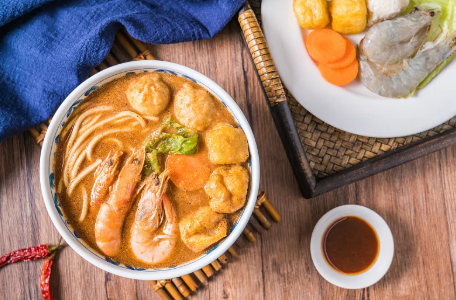
In the vast world of Chinese cuisine, sand tea noodles are like a shining pearl, emitting a unique and charming charm. Its story is intertwined with the turbulent changes of the Age of Discovery, blending the collision and integration of diverse cultures. After four hundred years of time baptism, it has become a classic delicacy deeply imprinted on people’s taste buds.
Introduction: The Food Revolution Triggered by Spices
When Portuguese merchant ships unloaded Southeast Asian satay sauce at Xiamen Port in the 16th century, they never imagined that this sauce mixed with crushed peanuts and curry leaves would undergo nuclear fusion with pig bone broth in a Chinese iron pot, giving birth to a street hard currency more resistant to inflation than Bitcoin: satay noodles. This wonderful culinary encounter opened a magnificent chapter in the development of satay noodles.
Decoding the DNA of Sand Tea Sauce: The Spice Cold War between Colonizers and Fishermen
1927 Xiamen version of Worcestershire sauce
Going back in time to 1927, overseas Chinese Chen Youxiang boldly innovated Satay in Indonesia. He cleverly removed the coconut fragrance from the satay sauce, increased the amount of chili, and ingeniously mixed in the unique moldy aroma of Pixian Douban. This carefully crafted blend has successfully created the “Sand Tea 2.0” version, which interweaves salty, sweet, and spicy flavors. Surprisingly, after testing, the amino acid content of this sauce was found to be 1.3 times that of Japanese miso. The rich amino acids give the satay sauce a rich and mellow flavor, setting a unique taste tone for satay noodles.
Molecular level umami formula
After in-depth research in the food laboratory of Xiamen University, the mystery of the irresistible freshness of satay sauce has been revealed. Originally, in the recipe of satay sauce, 30% fried garlic brings a rich garlic aroma and crispy taste, 25% caramelized shrimp contributes a unique fresh and sweet taste, and 20% capsaicin injects a warm and stimulating sensation into the sauce. This exquisite combination is like a savory bomb, precisely triggering the reward center of the brain, immersing the taster in a wonderful taste experience that cannot be extricated.
Geopolitics of a Bowl of Noodles
Soup Bottom: Liquid Fossils from the Age of Discovery
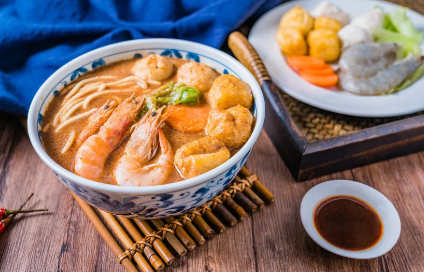
Walking into those old shops that deal in sand tea noodles, one can feel the care and attention to detail in making the soup base. The shop owners selected beef bones and put them in a pot with satay sauce, patiently simmering them over low heat for up to 8 hours. During this long process, the rich flavor of beef bones blends and permeates with the rich flavor of satay sauce. What’s particularly clever is that 15 rock candies will also be added during the process, which is not just a simple seasoning, but the wisdom of the Minnan fishermen. The addition of rock sugar can balance the pH value of the soup base, cleverly taming the overly strong flavor of colonial spices, and perfectly blending them with local flavors to form a unique and harmonious taste.
Alkali water surface: Carbon water moisture-proof black technology
In a city like Xiamen with a humidity of up to 90%, it is not easy to maintain the taste of noodles. The alkaline water surface used in the sand tea noodles can be regarded as a black technology for carbon water moisture prevention. It is carefully made from duck egg white and plant ash alkaline water, and this unique formula gives noodles excellent moisture resistance. In high humidity air, the alkaline water surface can maintain a chewy texture for 45 minutes, and its soup absorbing surface area is 23% larger than that of pasta. This means that every alkaline water surface can fully absorb the delicious broth of the sand tea noodle soup base, bringing diners a rich and full-bodied taste experience at the moment of entry.
Tip: Minnan Protein Game Field
The toppings of sand tea noodles can be regarded as a feast of protein, showcasing the diverse charm of Minnan cuisine with different choices.
Classic style: The pork liver edge, also known as the diaphragm muscle of pigs, is carefully cut into 3mm thin slices. Put it into a soup at 85 ° C and rinse for 7 seconds. In this short 7 seconds, myoglobin is perfectly locked in, making the pork liver not only fresh and tender in taste, but also retaining rich nutrients and unique flavor.
Seafood Party: Local small tube squid is a popular choice for seafood toppings. When making, it is necessary to cut it into wheat ear flower knives, so that when exposed to heat, the squid will curl into a natural sauce container. After absorbing the soup of the sand tea noodles, the delicious squid flavor complements the rich sand tea flavor, bringing a wonderful taste experience.
Sin’s Choice: Deep fried vinegar meat attracts many diners with its unique charm. It has a 40% higher efficiency in absorbing soup than bacon, and its crispy golden skin becomes crispy on the outside and tender on the inside after absorbing the sauce from the satay noodles. The sour and sweet taste of the vinegar meat itself complements the rich flavor of the satay noodles, and every bite is full of the temptation of sin.
Eating Ceremony: Dark Operation Manual for Sand Tea Noodles
Gold Mixing Formula
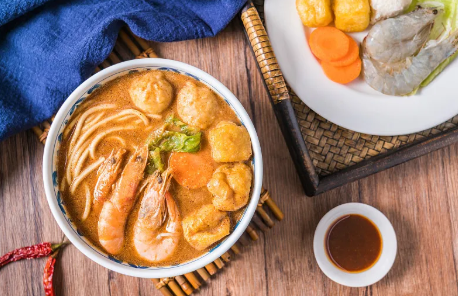
Eating sand tea noodles also has a unique sense of ceremony. Before tasting, stir counterclockwise for 7 turns. This seemingly simple action holds significant importance. By stirring in this way, peanut particles can evenly wrap around each noodle, allowing every bite to taste the crispness of peanuts, the smoothness of noodles, and the rich flavor of satay sauce, bringing a comprehensive feast to the taste buds.
Temperature Time Zone
In the process of tasting sand tea noodles, it is also necessary to grasp the subtle relationship between temperature and time. For the first 3 minutes, take a sip of hot soup. At this point, the temperature of the soup is just right, allowing you to fully experience the rich flavor of the soup base and the unique stimulation brought by the spices. 5-8 minutes later, you start to enjoy the topping. At this time, the topping absorbs the essence of the soup, and the temperature is more appropriate, with the best taste. And 10 minutes later, as time goes by, the water molecules in the alkaline water surface begin to disintegrate, and the taste of the noodles will gradually change. So, mastering this temperature time zone is essential to fully appreciate the deliciousness of sand tea noodles at different stages.
Hide Copy
In the southern Fujian region, there is also an interesting hidden “Easter egg”. When diners say “Jia Beng” (Min Nan dialect: eat noodles) to the boss, it is possible to unlock specialty dishes such as pig blood enema or shark soup. This not only brings unexpected surprises to diners, but also reflects the unique food culture and friendly interaction between neighbors in the southern Fujian region.
Shacha Noodles, this bowl carries a delicacy with a history of 400 years. From the introduction of spices during the Age of Discovery to the intelligent innovation of the people of southern Fujian, every element of it contains rich stories. Whether it’s the unique sand tea sauce, carefully brewed soup base, or diverse toppings and fun eating rituals, sand tea noodles have become a shining star in Chinese cuisine, worth exploring and savoring for every food enthusiast.
https://www.ctxkh.com/a-comprehensive-guide-to-chinas-regional-culinary-traditions/