https://www.ctxkh.com/a-culinary-guide-to-traditional-chinese-food-recipes-history/
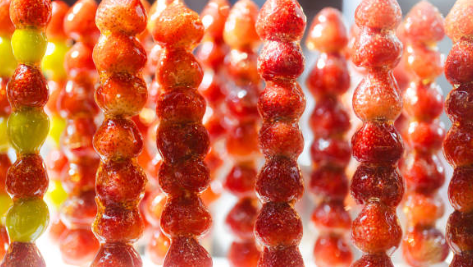
Tanghulu, a traditional snack bearing the fire of Chinese street smoke, has become a sweet taste in the memory of countless people with its unique taste of crispy outside and sweet inside and its attractive red appearance. Whether it is a festival celebration or a daily craving, a string of sweet and sour Tanghulu can always awaken the happiness of the taste buds. Today, we will unveil the method of making this classic dish, allowing you to replicate street delicacies even at home!
1、 Material selection preparation
Fruit selection:
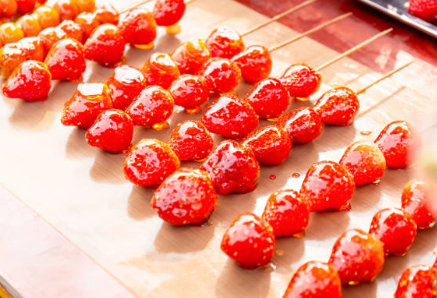
The traditional Tanghulu is dominated by hawthorn, whose sweet and sour pulp and sugar coating complement each other perfectly. If you want to innovate, juicy fruits such as strawberries and grapes are also good choices. When selecting, pay attention to the freshness and hardness of the fruit to ensure that it is not easily damaged during the sugar coating process.
Main materials:
White sugar: Choosing uniformly granulated white sugar is the key to forming crispy sugar shells.
Clear water: mixed with white sugar in a 1:1 ratio, used for boiling syrup.
Bamboo sticks: Durable bamboo sticks can stably string fruits, ensuring easy operation.
Tool List:
Thick bottomed sauce: evenly conductive to prevent syrup from sticking to the pot.
Candy thermometer: Accurately control the temperature of syrup to ensure reaching the “hard candy stage” (300 ° F/149 ° C).
Silicone brush: Brush off the sugar crystals on the pot wall at any time to prevent syrup from clumping.
Oil paper tray: an ideal platform for cooling Tanghulu to avoid adhesion.
2、 Step by step operation

1. Pre treated fruits
Cleaning and drying: Wash the fruit with clean water and thoroughly dry the surface moisture with kitchen paper. Residual water droplets can affect the adhesion of sugar coating, so it is important to ensure that the fruit is completely dry.
String fruits: Thread the fruits one by one onto a bamboo stick, paying attention to arranging them tightly but not squeezing them, leaving space for holding them. When wearing strawberries, you can insert them from the bottom center to prevent the flesh from cracking.
2. Boil syrup
Mixing and Heating: Pour an equal amount of white sugar and water into a thick bottomed pot, and heat over medium heat until the white sugar is completely dissolved. Remember not to stir to prevent the syrup from crystallizing.
Temperature measurement and observation: When the temperature of the syrup rises to 300 ° F (hard sugar stage), small bubbles will appear on the surface and become thick and transparent, similar to amber color. Immediately turn off the heat to prevent the syrup from burning.
3. Sugar coating and cooling
Quick dip in sugar: Hold a bamboo stick and quickly immerse the fruit in the syrup, gently rotate it to evenly coat it with sugar coating. The movement should be steady, ensuring that each fruit is completely wrapped in syrup.
· Draining and shaping: Lift the bamboo stick to let the excess syrup drip, and then put Tanghulu on the tray of greased paper. After cooling for a few minutes, the sugar coating will quickly solidify, forming a crispy outer shell.
3、 Avoiding pitfalls guide
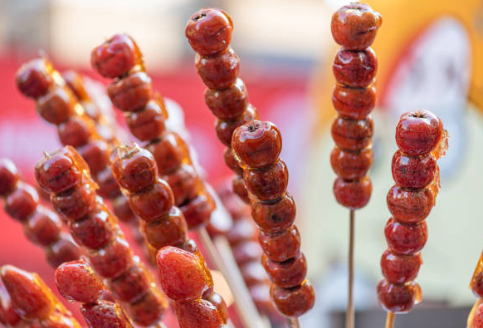
1. Syrup crystallization:
Reason: Mixing syrup or insufficient temperature.
Solution: Keep still while boiling sugar and use a thermometer to accurately control the temperature to 300 ° F.
2. Fruit slipping:
Reason: The surface of the fruit is not dried or overcooked.
Solution: Thoroughly dry fruits and choose slightly harder fruits (such as lightly undercooked strawberries).
3. Sugar coating is not crispy:
Reason: The syrup has not reached the hard sugar stage or the environmental humidity is high.
Solution: Ensure that the syrup temperature meets the standard, place it in a dry environment during cooling, and consume the finished product as soon as possible.
4、 Storage and enjoyment
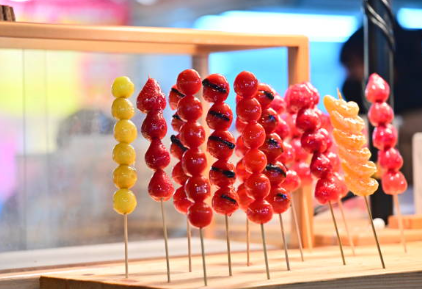
· Instant enjoyment: Tanghulu is best eaten within 24 hours after making, when the icing is the crispest and the fruit is the freshest.
Short term storage: If storage is required, it can be placed in a sealed box in a cool and dry place to prevent the sugar coating from becoming damp and soft.
· Creative matching: Tanghulu can be used with ice cream, hot drinks or as dessert decoration, and the taste of sweet and sour will add more layers.
conclusion
A string of red Tanghulu is not only a delicacy on the tip of the tongue, but also a microcosm of Chinese traditional culture. By carefully selecting materials and precise temperature control, you can also replicate this street classic at home. When the crispness of sugar coating collides with the juiciness of fruit, every bite is a blend of sweetness and happiness. Give it a try and let this traditional sweetness bloom in your kitchen!
https://www.ctxkh.com/a-culinary-guide-to-traditional-chinese-food-recipes-history/